en
en
 sr
sr  sl
sl  ro
ro  it
it  hu
hu  fr
fr  es
es  de
de  bg
bg 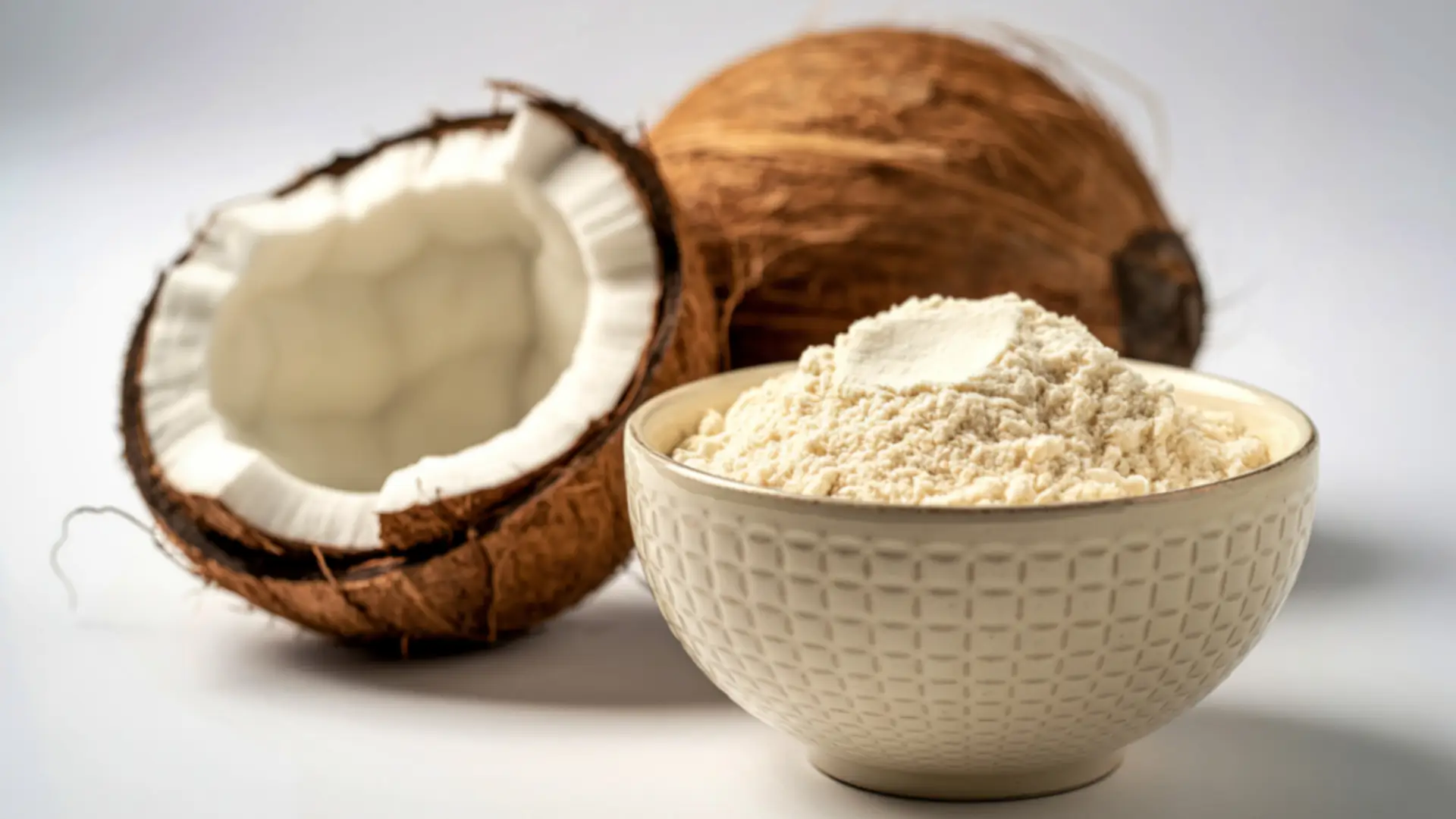
When transitioning to grain-free manufacturing, securing a reliable coconut flour wholesale partner is only the first step. For R&D departments, replacing traditional wheat relies on understanding complex rheology and hydration dynamics. Nutri Partners, acting as your strategic partner in functional plant-based ingredients, provides premium, finely milled coconut flour designed to meet the rigorous demands of modern Keto, Paleo, and gluten-free production lines.
As a professional bulk raw material supplier, we ensure full compliance with European food safety standards. According to EU Regulation No 828/2014 regarding the absence of gluten in food, raw material purity and preventing cross-contamination are paramount. Our highly controlled supply chain ensures your “gluten-free” label claims remain uncompromised.
Formulation Scenarios: Mastering Extreme Hydrophilicity
The defining characteristic of our coconut flour wholesale supply is its extraordinary fiber content (typically 40-50%). This makes it exceptionally hydrophilic (water-absorbent). Technologists must approach it not merely as a flour, but as a high-performance binder and moisture regulator under varying scenarios:
- Scenario A: Keto & Gluten-Free Bakery. Coconut flour absorbs 3 to 4 times more liquid than wheat flour. Attempting a 1:1 substitution will result in severe crumbling and a dry mouthfeel. R&D must adjust the matrix by significantly increasing liquid ratios (water, dairy, or plant milks) and structural binders (like eggs or hydrocolloids) to maintain elasticity.
- Scenario B: Protein Bars and Extruded Snacks. In cold-pressed protein bars, liquid syrups and nut butters can separate or “sweat” over time. Adding a small percentage of coconut flour acts as a functional sponge, binding excess lipids and syrups, thereby stabilizing the texture and improving shelf life.
- Scenario C: Moisture Retention (Anti-Staling). Because it holds onto moisture so tenaciously, adding just 5-10% of coconut flour to a standard gluten-free blend can drastically reduce the rate of staling, keeping cakes and muffins perceived as “fresh” for longer periods.
Technical Comparison: Low-Carb Flours
To optimize your procurement and formulation strategy, compare how coconut flour behaves against its main low-carb alternative.
| Technical Parameter | Coconut Flour | Almond Flour | Standard Wheat Flour |
|---|---|---|---|
| Hydration Capacity | Extreme (Absorbs 3-4x its weight) | Low | Moderate |
| Fat Content | ~10% – 15% (Defatted) | ~50% (High lipid) | ~1% – 2% |
| Fiber Content | Very High (~40% – 50%) | Moderate (~10%) | Low (~2% – 3%) |
| R&D Application | Moisture binding, High-fiber baking | Rich texture, Keto base | Gluten network formation |
Global Sourcing and Supply Chain Stability
Consistent granulation and defatting processes are critical to ensure batch-to-batch reliability in your hydration calculations. Nutri Partners leverages global sourcing to provide coconut flour wholesale that is finely milled and strictly standardized. Every delivery comes with a comprehensive Certificate of Analysis (CoA), confirming its microbiological safety, moisture levels, and organic compliance where required.